Using Data for Storytelling
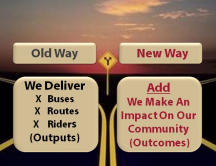
Stephen Few, data visualization expert and author, once said, “Numbers have an important story to tell. They rely on you to give them a clear and convincing voice.” Everyone loves stories – from novels you can’t put down to tear-jerker movies that actually make you cry to country songs about small towns just like yours. Putting data in your stories (or telling stories with your data) adds another layer to make the impression and message last. This National RTAP Best Practices Spotlight Article on Using Data for Storytelling will show how rural and tribal transit agencies have mastered this and how you can become an expert too.
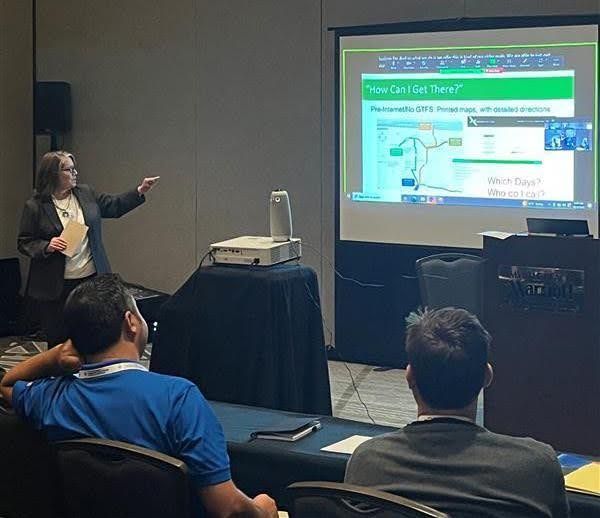
At the 2025 National RTAP Technical Assistance Conference in Austin, Texas, Lillian Karabaic, the host of Oregon Public Broadcasting's Weekend Edition and Stop Requested, a series about traveling around Oregon on Public Transit. delivered the keynote presentation at our conference. She inspired conference participants about how they can use their data to tell their agency’s story.
Data and statistics are extremely important to transit management, and practically all agencies collect some form of data on system performance, trips, ridership, etc. Agencies may upload data into the National Transit Database (NTD) or utilize statistics from that database and many other sources. Transit agency data can show the system’s value to the community (both riders and potential future riders) and stakeholders, including coordination partners, elected officials, and funders. But simply stating, “ABC Transit averaged over 130,000 vehicle miles travelled,” is well . . . rather boring and probably wouldn’t capture anyone’s interest. Consider starting out with, “ABC Transit did it! Our buses travelled over 130,000 miles two years ago, which was pretty good, but we increased that by 25% last year through creative fund braiding for three new vehicles, exceptional customer service, and innovative new routes.” This may make people sit up and take notice.
National RTAP offers several resources for understanding and utilizing data:
Uncovering Data from the National RTAP Find Anything Toolkit and
Transit Benefit Statistics from our Marketing Toolkit can provide information about high-quality and reputable transit data sources. You’re welcome to use any of these statistics to start your data story; for example, according to AARP, 52% of people say it's extremely or very important to have safe public transportation. Access Allegany in rural Pennsylvania uses statistics from the U.S. Department of Transportation (U.S. DOT) and the American Public Transportation Association (APTA) on its
Benefits of Public Transportation web page to tell its story. After explaining that the average household spent $9,826 on transportation, making it the 4th largest expenditure, and households can save approximately $10,000 by taking public transportation, the story ends by explaining that people who use Access Allegany can read a book, finish work, do a crossword puzzle, complete homework, and relax.
Stories about Funding
Applying for a grant or in-kind match from a potential funder is an opportunity to “pitch” a transit agency’s story to the grant reviewers using statistics that the grant writers can find. This is the time to let the funder know how high the mountains in the area are, how many miles it is from the outskirts of town to the nearest medical center, and how many residents in the community do not have a vehicle. The greater the gaps and the greater the need, as shown through concrete numbers, can increase the likelihood of receiving funding. Here is data from a story National RTAP wrote on
Transportation to Scenic Destinations, “With a year-round population of about 1,200, it may surprise people that the Town of Winter Park Transit, known as The Lift, provides over half-a-million rides a year.” The transit agency featured has received funding through the years from many federal, state, and local sources, as well as intergovernmental agreements.
A well-written, clear, and absorbing grant proposal does more than just list numbers; it is a form of storytelling. National RTAP provides a
Directory of Grant Writers with consultants to assist transit agencies that need help with grant writing.
Once the funding is received, the agency can tell another type of story to thank the funder. OATS Transit, a rural transit agency in Missouri, has a blog that posts articles such as
OATS Transit receives grant from Allen P. & Josephine B. Green Foundation. The article lists the amount received and what OATS will use it for, but also includes an interesting story about the Green family history going back to 1910. This type of story creates community and makes the funder feel appreciated.
Transit agencies can also work with national partners to share their success stories as case studies. Transit technical assistance organizations (including National RTAP) are always looking to feature these types of articles. Here is one example. The Shared-Use Mobility Center’s case study
From Pilot to Permanent: The Evolution of PICK Transportation in Oklahoma introduces PICK Transportation, operated by a consortium of public and Tribal communities and led by Pelivan Transit. The case study includes the FTA Integrated Mobility Innovation program grant amount and an innovative fare strategy (Hospitals pay a flat rate of $3 per trip and reimburse PICK directly) as part of a fascinating story on how this program was planned and implemented.
National Capital Trail Network
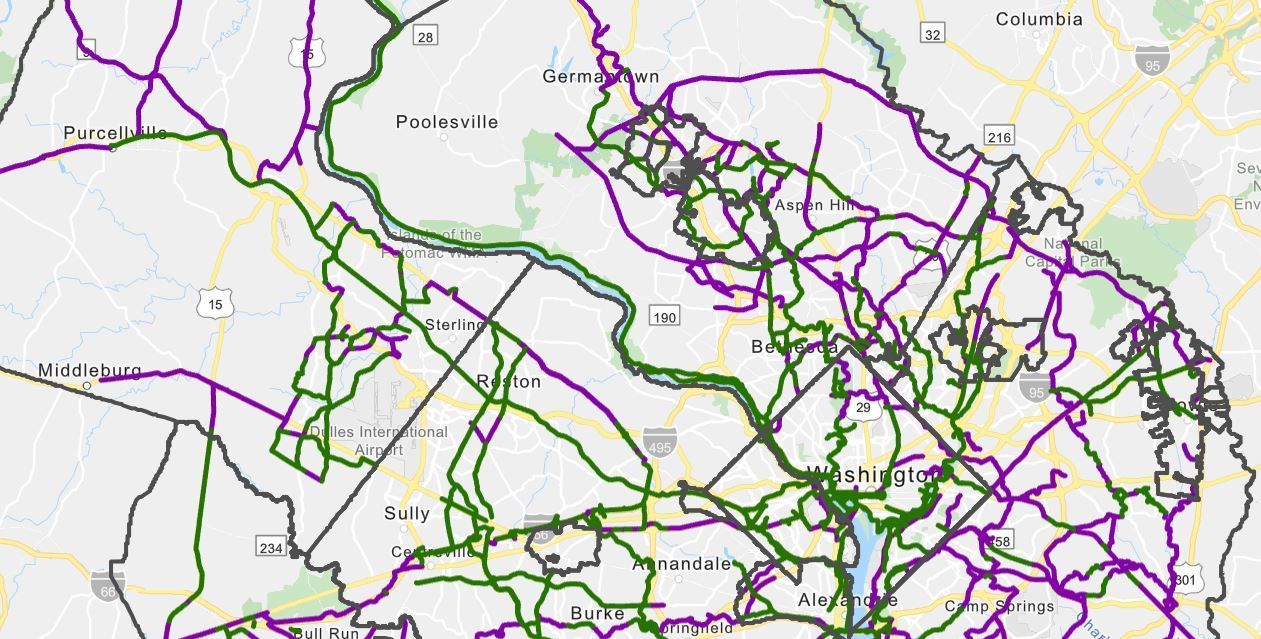
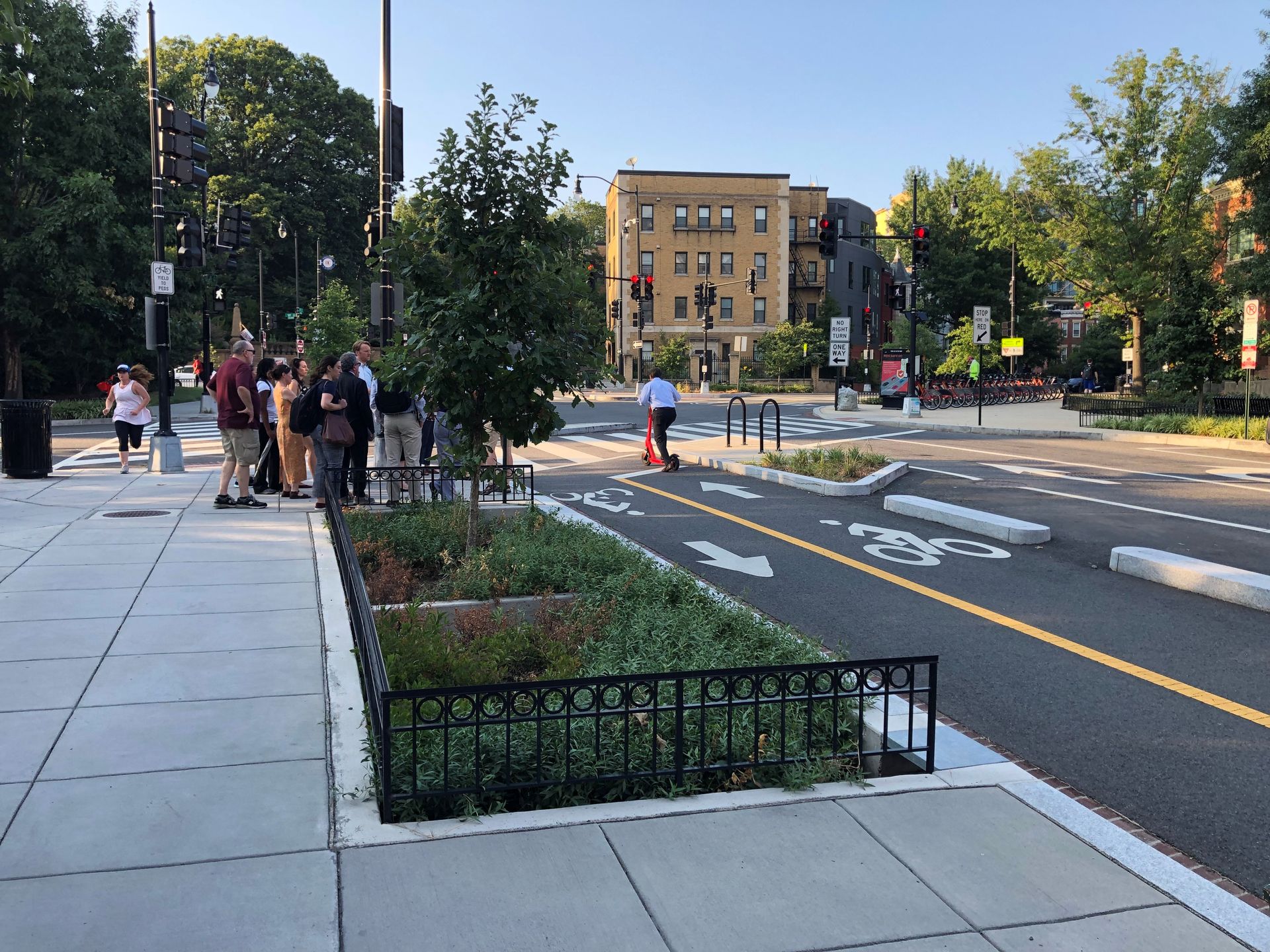
The greater Washington, DC region is renowned for the quality and extent of its shared-use paths and several notable long-distance bicycle routes that pass through the region. Michael J. Farrell, Senior Transportation Planner for the Metropolitan Washington Council of Governments (MWCOG) in Washington, DC, spearheads a unique shared-use path project that spans across Washington, DC, Maryland, and Virginia.
National Capital Trail Network
National Capital Trail Network
The greater Washington, DC region is renowned for the quality and extent of its shared-use paths and several notable long-distance bicycle routes that pass through the region. Michael J. Farrell, Senior Transportation Planner for the Metropolitan Washington Council of Governments (MWCOG) in Washington, DC, spearheads a unique shared-use path project that spans across Washington, DC, Maryland, and Virginia. The groundwork for the Bicycle and Pedestrian Plan for the National Capital Region began about twenty years ago through the work of the National Capital Region Transportation Planning Board (TPB).
The groundwork for the Bicycle and Pedestrian Plan for the National Capital Region began about twenty years ago through the work of the National Capital Region Transportation Planning Board (TPB). The Bicycle and Pedestrian Subcommittee of the TPB Technical Committee advises the TPB and its Technical Committee and other committees on bicycle and pedestrian considerations in overall regional transportation planning. It meets six times per year and each agency involved sends their bicycle and pedestrian planners. While the TPB is collaborative, the project works so well because the various agencies involved have different needs and roles and can customize their plans based on those; for example, setting speed limits for their area’s shared-use paths. Each jurisdiction has different challenges, and each can plan at its own speed.
TPB members include large agencies like the National Park Service (NPS) and the Washington Metropolitan Area Transit Authority (WMATA), as well as small, rural transit agencies in the region. The TPB convenes an annual shared micromobility workshop for all its members and administers working groups where agency representatives report on their progress and share best practices. TPB also provides technical assistance to its agencies and provides grant funding. If agencies want funding, they must produce and report on projects such as shared-use paths or long-distance trails. Since the TPB started planning, the region has built a network of approximately 800 miles of shared-use paths consisting of paved or packed crushed stone surface that are suitable for pedestrians, road bikes, e-bikes, and e-scooters. Walking and bicycling account for 11% of all trips in the region. 92% of bike/walk commuters reported being satisfied with their commutes, the highest of any commuter mode, according to a recent survey.
TPB members include large agencies like the National Park Service (NPS) and the Washington Metropolitan Area Transit Authority (WMATA), as well as small, rural transit agencies in the region. The TPB convenes an annual shared micromobility workshop for all its members and administers working groups where agency representatives report on their progress and share best practices.
TPB also provides technical assistance to its agencies and provides grant funding. If agencies want funding, they must produce and report on projects such as shared-use paths or long-distance trails. Since the TPB started planning, the region has built a network of approximately 800 miles of shared-use paths consisting of paved or packed crushed stone surface that are suitable for pedestrians, road bikes, e-bikes, and e-scooters. Walking and bicycling account for 11% of all trips in the region. 92% of bike/walk commuters reported being satisfied with their commutes, the highest of any commuter mode, according to a recent survey. The regional bike sharing program, Capital Bikeshare, includes about 5,000 bicycles at over 600 stations in seven jurisdictions. The project hopes to have over 1,700 miles of shared-use paths by the year 2045.
Storytelling for Advocacy
Advocating for your transit system is one of the most important tasks of a transit manager and board. There are two important reasons why advocacy is vital to a transit agency. First, an effective advocacy program will enlist the help of individuals and organizations to whom transit services are critical. Secondly, as local support broadens, the funding base or available resources for transit services may also broaden. When the support base of an agency is expanded, it is more likely that services can be sustained within the community. Jeremy Bell, former director of Choctaw Transit, shared a best practices data story in National RTAP’s
Advocating for Your Transit System technical brief about how he failed three times in trying to negotiate a deal to provide transportation services to Meridian, a city with a population of 37,000 people. After a year and a half, Choctaw Transit was able to negotiate a Memorandum of Understanding (MOU) and has been providing services to the City of Meridian for over five years and transporting 26% of the city’s population. Originally, the transit agency was set to receive 50% of revenues, but in the end, they received 100% of revenues.
Visual Storytelling
Data storytelling doesn’t have to be just written content. A well-designed infographic is literally a picture that tells a thousand words. The Heart of Iowa Regional Transit Authority (HIRTA) has a
funding web page with clear and attractive infographics on its funding and expenses that ends with a call to action.
The Virginia Department of Rail and Public Transportation (VDRPT) maintains a web page of
transit agency data stories with powerful graphics that demonstrate growth. The one for Pony Express creatively shows annual increases in ridership not by typical bar graphs, but by increasing illustrations of ponies.
A video is another exciting way to tell data stories. In
Faces of Transit in Nebraska - Open Plains Transit, one of many video data stories in Nebraska Public Transit’s
Faces of Transit in Nebraska Series, stats like, “There are 87,000 residents in the area and it’s not a one size fits all,” and “Open Plains Transit covers 14 different Nebraska counties,” pepper the video with tactical information that demonstrates the value of this service.
Social media and podcasts are other fun ways to tell transit agency data stories. Facebook, LinkedIn, X, Instagram, and TikTok are seen by millions of people, and it’s possible to reach potential riders and partners that never even knew what your transit agency could provide through social likes and shares of the post. National RTAP publishes Review Board Spotlight Articles on several of its social media platforms. This
Spotlight Article on LaShonda McKinney, CCTM, Executive Director of Bolivar County Council on Aging, Inc. (BCCOA) in Cleveland, Mississippi, includes data on how BCCOA went from 16 vehicles to 67 and now spans 3 locations, but it also tells a riveting tale about BCCOA’s history and LaShonda’s own journey.
Verbal Storytelling
While written and visual documents are valuable components of data stories, presenting the message aloud to community leaders, the public, and others enables the speaker to gain support for the agency’s goals through inflection, body language, and eye contact. Some people are natural-born storytellers, while others may need a lot of practice. Live storytelling is a way to let the data shine through a well-timed pause before announcing a particularly impressive statistic or using a foreboding tone when introducing potential service gaps if a project is not fully funded. The presenter should be well-prepared and have the complete speech in front of them since facts often have a way of leaving one’s mind when one is in front of a crowd. Read an example of
testimony that tells a story by starting out with compelling data from Arrowhead Transit in Minnesota.
It is important to know one’s audience and be prepared for any and all questions. Testifying in front of government officials is quite different than sharing the transit agency’s latest financials with the board of directors. Using the storytelling format for any audience is a way to keep them engaged and more likely to participate in a meaningful discussion.
If you’re not a seasoned presenter and there is no one on staff who can fill that role, consider contracting with a coach or a facilitator for assistance. And remember that even the biggest names in Hollywood sometimes get flustered, but audiences will remember the good story you told and probably won’t even care that you were nervous.
Verbal storytelling can be done in person, as well as through screen-sharing mechanisms like Zoom, Microsoft Teams, etc. These tools can add another fun element to data storytelling. The presenter can post an online poll to gauge the audience’s knowledge of the statistics they plan to present (especially if the answer is a surprising one).
Celebrating Milestones
Some of the best data, and most “story-worthy,” are milestones about the transit agency’s staff, riders, and service. The numbers should be included in the title of the article – “XYZ Transit Welcomes Its Millionth Rider” or “Hello Transit Driver Honored for 45 Years of Service.” The story should include some human-interest facts about the person being honored, as well as a photo. Here is a
story about Maine-based Island Explorer’s 10 millionth rider that is sure to put a smile on your face.
Putting It All Together
Every transit agency’s story is unique, and the use of surprising stats can make it even more interesting. When Benzie Bus created a
PowerPoint presentation after receiving a 2021 National RTAP Community Rides Grant, the data that the agency chose to provide included: “the smallest county in Michigan (860 sq mi; 63% water), population 18k in winter/50k in summer, and one stop light,” making their story much more personal and memorable.
Consider approaching media outlets to tell your agency’s data story. Journalists and newscasters are often looking for stories with a twist that will bring in readers and viewers, and are usually excellent writers and presenters. They may think of ways to present your data that people in the transit industry would not have thought about. National RTAP’s Marketing Toolkit provides
guidance on how to write a news release. Remember that when space is limited, newspaper editors remove text from the end of your story.
Learn from others who have made storytelling a priority. “Storytelling is a powerful way to share rider experiences, build trust with new users, and advocate for funding,” explains Carrie Kissel, Associate Director of Transportation, National Association of Development Organizations (NADO). Here are some
examples shared at the 2025 National RTAP Technical Assistance Conference that inspired Carrie:
- Faces of Transit: A photo and story series highlighting the people behind rural transit in and around the communities they serve in Oklahoma.
- Voices from the Field: The SCAN Foundation: Real stories from older adults about their transportation needs and experiences, offering insights for planning.
- TransitCNMI Instagram: A creative social media example showing how short-form video can engage riders and showcase transit benefits from TransitCNMI.
- Stop Requested – Oregon: A multimedia radio show project exploring the role of public transit in connecting communities across Oregon.
- Light of the Sun – Nonprofit: A nonprofit initiative using storytelling to highlight the impacts of their powerful work.
Learn more about skills and techniques for storytelling with data. You don’t have to be a data analytics expert or a data scientist. Here are some resources to help you get started:
Case Study: Bolivar County Council on Aging, Inc. (BCCOA), Cleveland, MS
71,489 trips
➔
79,549 trips
=
8,060 more trips
So how did BCCOA do it? Here are some more numbers, not as large, but just as important. They purchased
10 new
6-passenger ADA accessible vans, hired
4 new drivers, and partnered with
2 new organizations to provide transportation:
- Willowood Development in Jackson, MS – a large employer that trains persons with disabilities
- Jackson Medical Mall Foundation – a provider of medical, social, and shopping trips for older adults
“We’re doing well,” exclaims LaShonda, “and we’re doing well by doing good!”
Iris Young, Jackson’s Regional Director for Willowood, agrees. “Willowood Developmental Center has been receiving services from BCCOA for about two years,” states Iris. “They have been providing transportation services for one of our locations for morning and afternoon routes. These services allow our individuals more independence as they learn to navigate within their communities. Willowood has been pleased with the services that BCCOA has provided.”
And if this weren’t enough, let’s introduce another number to this data story –
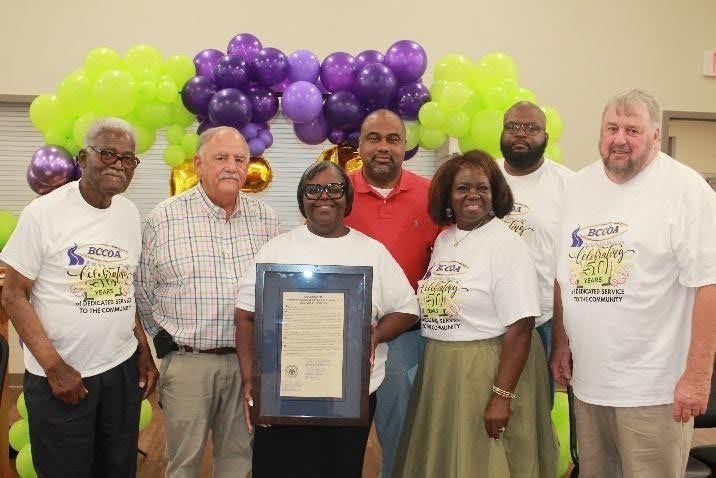
50. The year 2025 was BCCOA’s 50th anniversary, and as you can see, there has been much to celebrate. The photo at the top of this case study shows LaShonda at BCCOA’s 50th Anniversary Celebration along with the Board of Directors and the Board of Supervisors, all decked out in festive 50th anniversary t-shirts.
When LaShonda made her speech, she was a bit nervous and didn’t quite remember the exact trip data, but the message about BCCOA’s success certainly got through. And the festivities included balloons, giveaways, face painting, and lots of fun. By the way, BCCOA’s 50th anniversary celebration took place on a day with some numbers you won’t want to forget –
7/16/25 (July 16). That’s Rural Transit Day, of course.
Now let’s look at another number –
1975. The late Dr. Juniper Yates "JY" Trice, known in the region as the "Dean" of Public Transportation, started the first route for what was to become Bolivar County Council on Aging Transportation from his own car. He saw a woman with two children whose driver couldn’t drive them to a store, and he volunteered to do so himself. So - let’s look at those trip numbers again:
1 trip
➔ 79,549 trips
=
79,548 more trips
And in case you were wondering, that’s a
7954700% increase!
Now it’s time to tell your data story!
Acknowledgments
Thank you to the following National RTAP Review Board Members for their reviews and contributions to this article: John Andoh, Transit General Manager, Redding Area Bus Authority (RABA); LaShonda McKinney, Executive Director, Bolivar County Council on Aging, Inc. (BCCOA); and Katy Miller, Transit Programs Manager, Virginia Department of Rail & Public Transportation (VDRPT).
This document was prepared by National RTAP with the financial assistance of the U.S. Department of Transportation. The contents do not necessarily represent the opinions or policy of any agency of the U.S. Government, and the U.S. Government assumes no liability for the contents or use thereof. It does not have the force and effect of law and is not meant to bind the public in any way.